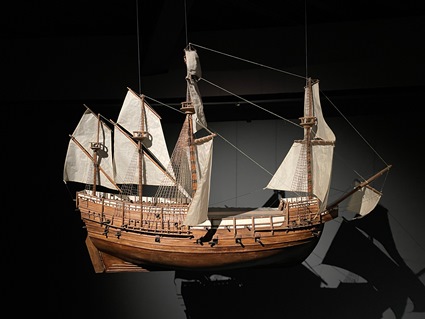
The Mary Rose was a formidable warship of England’s Royal Navy during the reign of King Henry VIII. Launched in 1511 from the shipyards of Portsmouth, the Mary Rose made a strong statement about the burgeoning naval power of Tudor England. Crafted with meticulous attention to detail, the Mary Rose boasted a formidable arsenal and sturdy construction, embodying the pinnacle of 16th-century naval engineering. As a flagship of the English fleet, the Mary Rose played a pivotal role in various military campaigns, projecting English power across the seas during a tumultuous era of conflict and conquest. From skirmishes against French adversaries to safeguarding England’s shores against foreign incursions, the Mary Rose served as a guardian of the realm, earning a fearsome reputation on the high seas.
On July 19, 1545, during the Battle of the Solent, engaged in a fierce naval confrontation against the French fleet, the Mary Rose suddenly listed to starboard and swiftly sank beneath the waves, taking with it the lives of many sailors and soldiers. The precise cause of the sinking remains shrouded in mystery, with theories ranging from structural failure to the impact of adverse weather conditions. The Mary Rose lay hidden on the harbor sea bottom for over 400 years until in a remarkable feat of maritime archaeology, the wreck was rediscovered in 1971, lying in a watery grave off the coast of Portsmouth. Over the ensuing decades, a painstaking salvage operation ensued, culminating in the recovery of the ship’s remains and an astonishing array of artifacts. After eating my breakfast on a bench I spent an hour in the Mary Rose Exhibit Hall.
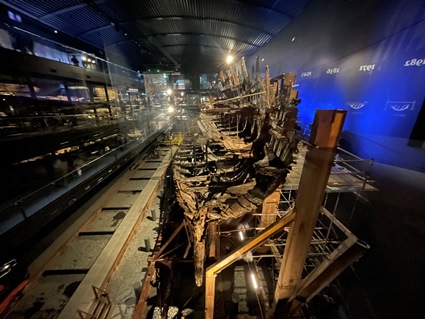
The preserved timbers of the hull and decks of the starboard side of the ship are displayed in an airtight room 4 stories high and 150 feet long.
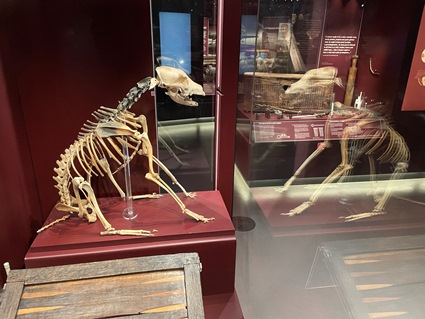
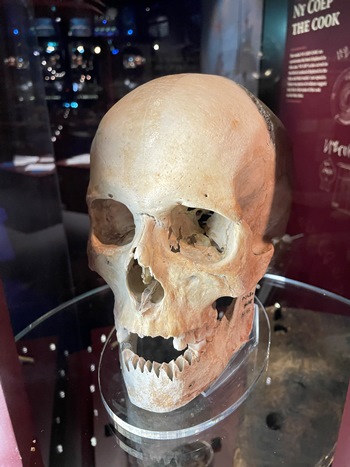
There are exhibits in rooms on either end of the ship on all three levels displaying some of the 9000 artifacts recovered along with the ship which include long bows, arrows, cannon, the ships brick oven and cast iron cauldron and skeleton’s of the carpenter’s dog and some of the ships crew.
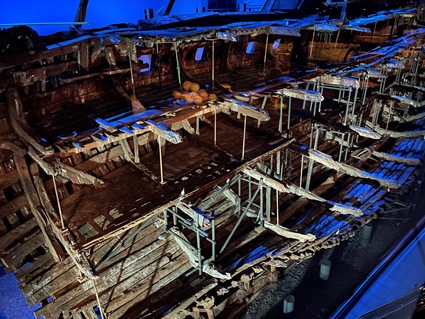
As you wind your way up the four levels you pass by the Mary Rose, displayed behind glass, four times and each level has different displays as well as projections cast on the ancient timbers depicting shipboard life.
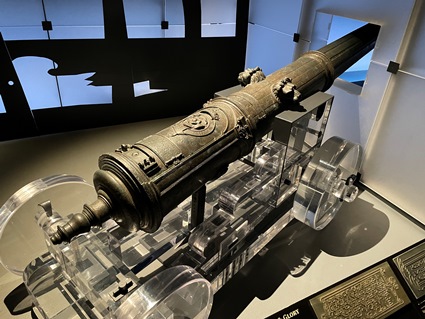
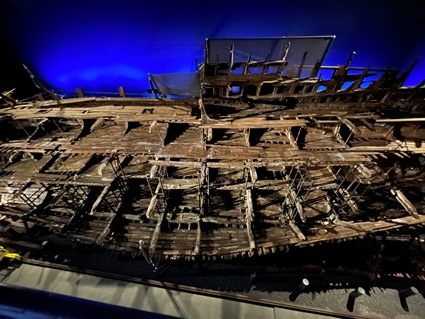
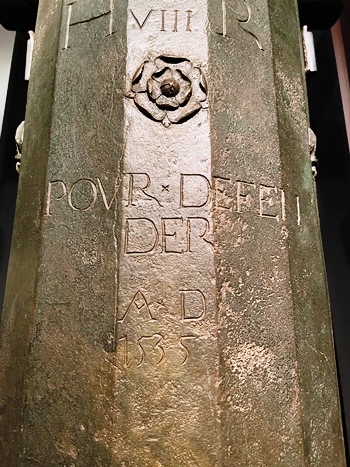
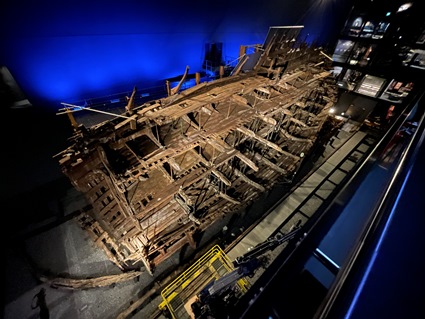
I once again listened to an audio tour as I wandered the exhibits and when I reached the top level I passed through an air lock and was in the same room as the ship looking over her from above. The exhibit ends with a 4D film (blowing wind, shaking seats and bubbles create the 4th dimension) of the effort to find, recover and raise the Mary Rose.
HMS Warrior
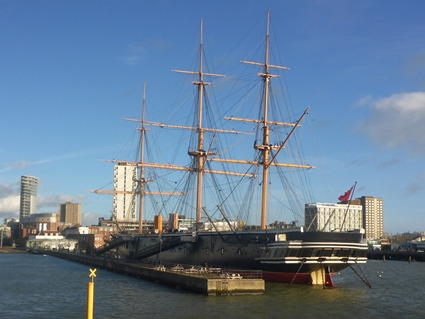
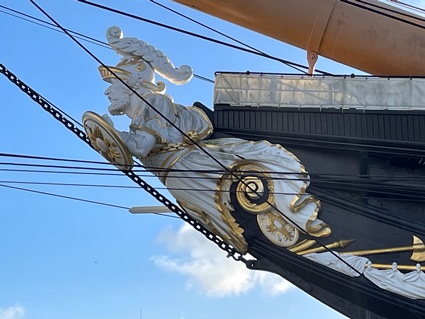
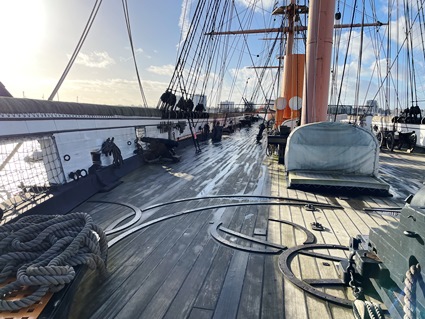
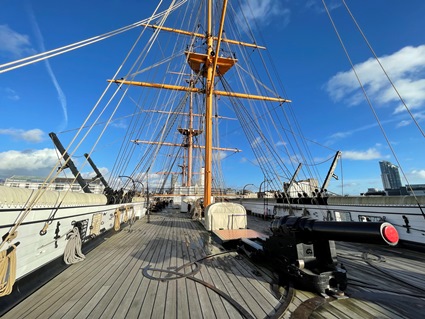
I then took a quick tour of the HMS Warrior, built in 1860, a steam powered iron clad behemoth that was so far advanced over any other ship that no one dared come near her and she never fired a shot in anger unlike the HMS Victory which saw a lot of action.
The Harbor Cruise
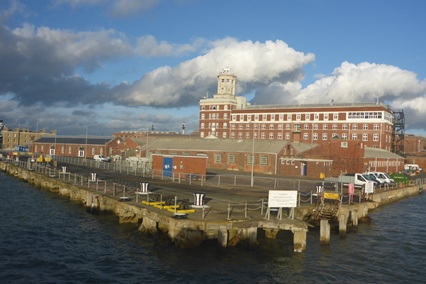
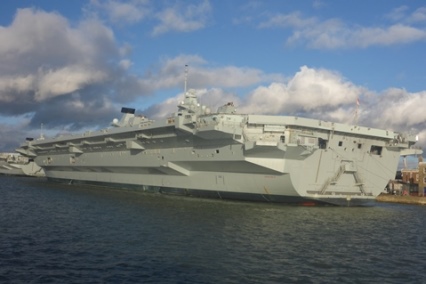
I then took a cruise around the Portsmouth Harbor which told of the dredging of the harbor by convict labor and passed beneath the 20th century battle gray aircraft carriers as it circled the harbor pointing out moorings and shore-side emplacements.
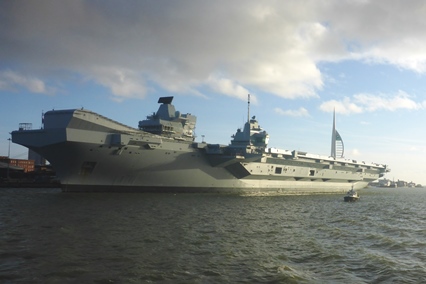
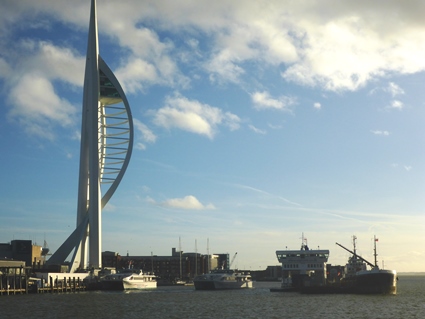
I hoped off the boat at the Spinnaker Tower and walked back though town to the Historic Dockyard.
HMS Victory Restoration
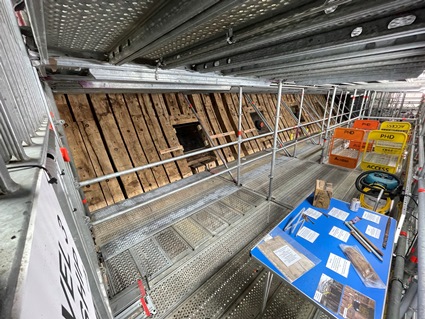
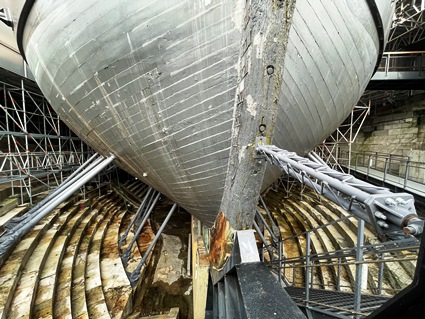
I next took a tour of the restoration of the HMS Victory which afforded a look at the port side of the vessel with the planking removed. You could also descend into the dry-dock and walk under the ship.
The Museum of the Royal Navy
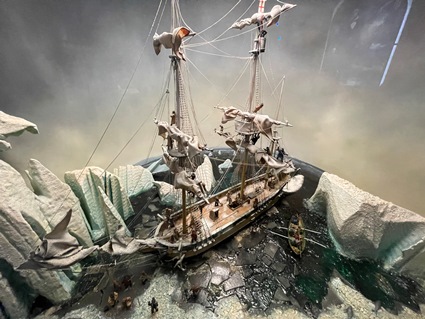
After a quick walk through the Museum of the Royal Navy which was scant on the 18th and 19th century navy and more focused on the 20th century which does not interest me as much as the past I was done with the dockyard and caught the bus back to our part of Portsmouth.
Sunset on the Strand
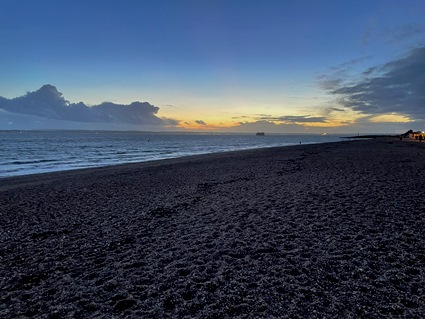
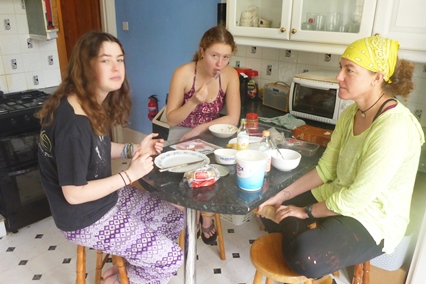
There I watched the sunset on the strand before heading back to our accommodation where I met up for dinner with Colleen, Ambiana and Jakobi who had spent the day walking the coast into town and back
What I’m Reading